
Yes, street food in Istanbul can be safe to eat, especially when you choose busy vendors, freshly prepared food and places with good hygiene and fast customer turnover.
But as in any major city, not every street-food stall carries the same level of food-safety risk.
The best approach is not to avoid Istanbul street food altogether. Instead, learn what to look for before ordering.
From simit and döner to midye dolma and kokoreç, Istanbul has one of the most varied street-food scenes in Türkiye. With a few practical precautions, travelers can enjoy it more confidently.
If you’re also planning your food budget, check out our guide on how much street food costs in Istanbul to get a better idea of what to expect.
Is Street Food in Istanbul Safe?
In general, many travelers eat street food in Istanbul without problems.
The main risks are the same ones you would consider anywhere else:
- Poor food storage
- Undercooked meat
- Seafood kept at unsafe temperatures
- Unclean preparation surfaces
- Food sitting out for long periods
- Cross-contamination
- Poor hand hygiene
The type of food also matters.
A freshly baked simit carries a very different level of risk from shellfish that needs careful temperature control.
So the better question is not simply “Is street food safe in Istanbul?” but:
Is this particular food freshly prepared, properly stored and sold by a busy, clean vendor?
How to Choose Safe Street Food in Istanbul
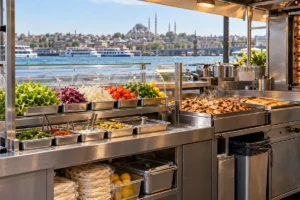
A few visual checks can tell you a lot.
Choose Busy Vendors
High customer turnover is usually a good sign.
A busy stall is more likely to:
- Prepare food frequently
- Sell ingredients quickly
- Avoid long holding times
- Maintain regular cooking cycles
If one vendor has a steady local crowd while another nearby stand is completely empty, the busier one is generally the safer choice.
Look for Freshly Cooked Food
Whenever possible, choose food that is:
- Cooked in front of you
- Reheated thoroughly
- Served hot
- Prepared in small batches
Hot food should ideally arrive hot rather than lukewarm.
Check General Cleanliness
You do not need a professional inspection checklist.
Look at simple details such as:
- Clean counters
- Clean utensils
- Covered ingredients
- Organized preparation areas
- Proper waste disposal
- Separate handling of raw and cooked foods where relevant
A chaotic or visibly dirty stall is a reasonable reason to move on.
Follow the Local Crowd
One of the easiest ways to choose street food in Istanbul is to watch where local people are eating.
Popular local vendors often have:
- Regular customers
- Fast turnover
- Established routines
- A reputation to protect
This is especially useful in busy food districts such as:
- Kadıköy
- Eminönü
- Beşiktaş
- Karaköy
- Sirkeci
- Beyoğlu
It does not guarantee safety, but it is a useful practical signal.
Which Istanbul Street Foods Are Generally Lower Risk?
Some street foods are relatively straightforward because they are baked, cooked thoroughly or served immediately.
Simit
Simit is one of the easiest street foods for travelers to try.
This sesame-covered bread is baked and sold throughout the day.
It is typically eaten:
- Plain
- With tea
- With cheese
Choose simit that looks fresh rather than one that appears to have been sitting out for a long time.
Roasted Chestnuts
Kestane, or roasted chestnuts, are especially common in colder months.
They are cooked over heat and served warm.
Freshly roasted chestnuts from a busy vendor are a simple street snack with relatively few handling steps.
Corn
Street vendors often sell:
- Boiled corn
- Grilled corn
Choose corn that is served hot and prepared from a clean-looking setup.
Freshly Cooked Börek
Börek sold by bakeries or busy pastry shops can also be a practical choice, especially when it is freshly baked and served hot.
Is Döner Safe to Eat in Istanbul?
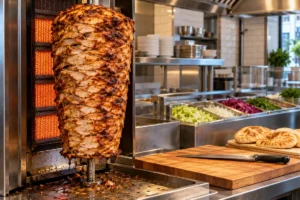
Döner is widely eaten across Istanbul and can be a good street-food choice when prepared properly.
The most important thing is turnover.
Look for a busy restaurant or stand where:
- The spit is actively cooking
- Meat is being sliced frequently
- Cooked surfaces appear well browned
- Shaved meat is not sitting around for long periods
Be more cautious if the meat looks undercooked or if pre-sliced döner has been sitting at room temperature.
Busy döner shops are generally preferable to quiet stands with slow turnover.
Is Midye Dolma Safe in Istanbul?
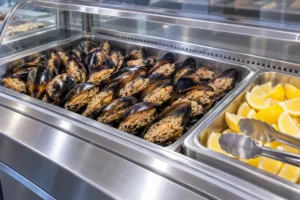
Midye dolma deserves more caution because it contains shellfish and seasoned rice.
Both ingredients require careful handling. If you are unfamiliar with the dish, our complete guide explains what midye dolma is, how it is prepared and how to eat it.
Midye dolma is commonly sold:
- From street stands
- By mobile sellers
- In dedicated midye shops
- At seafood restaurants
Choose sellers with:
- High turnover
- Good refrigeration or proper holding practices
- Clean presentation
- An established location
- Fresh-looking mussels
Avoid mussels that smell strongly unpleasant or appear to have been sitting in warm conditions for a long time.
For travelers with particularly sensitive stomachs, eating midye dolma at a busy dedicated shop or restaurant may feel more comfortable than buying from an unknown mobile seller. Our guide to the best places to eat midye dolma in Istanbul includes established options in several districts.
Is Kokoreç Safe to Eat?
Kokoreç is made from seasoned lamb or sheep intestines cooked on a rotating spit.
Because it is an offal dish, thorough cooking and proper preparation matter.
Choose a busy kokoreç specialist where:
- The meat is cooked thoroughly
- The spit is actively turning
- Portions are cut from hot, cooked areas
- Preparation surfaces look clean
Kokoreç is often chopped after cooking and reheated on a hot griddle, which should leave it thoroughly heated before serving.
What About Balık Ekmek?
Balık ekmek, or fish sandwiches, are especially associated with areas such as Eminönü.
As with any seafood dish, freshness and temperature control are important.
Look for fish that is:
- Cooked to order
- Served hot
- Stored appropriately before cooking
Busy vendors with steady turnover are again preferable.
Are Raw Vegetables Safe to Eat?
Raw vegetables can be more difficult for travelers to judge because they are not cooked before serving.
You may encounter:
- Lettuce
- Parsley
- Tomato
- Cucumber
- Onion
- Salads
Most travelers eat these foods without problems, but people with very sensitive digestive systems may prefer vegetables that appear freshly washed and prepared.
If a salad looks wilted, warm or as though it has been sitting uncovered for a long time, skip it.
What About Sauces and Condiments?
Sauces can sometimes remain at room temperature for long periods.
Pay particular attention to:
- Mayonnaise-based sauces
- Dairy-based sauces
- Yogurt sauces
Cold sauces should ideally be kept cold.
Commercial bottled condiments are generally easier to judge than homemade sauces left uncovered on a counter.
Is Tap Water Safe for Travelers in Istanbul?
Many visitors prefer bottled or filtered water for drinking.
You will find bottled water widely available throughout Istanbul.
When buying bottled water, make sure the seal is intact.
For most travelers, using bottled water for drinking is an easy precaution, particularly if their digestive system is not accustomed to local water.
Can You Have Ice in Drinks?
Ice safety depends on the water source and how it has been handled.
Established cafés, restaurants and hotels commonly use commercially produced or properly treated ice.
If you are unsure at a very small street stand, you can simply choose a drink without ice.
Can Tourists Get Food Poisoning in Istanbul?
Yes, it is possible, just as it is in any destination.
Foodborne illness may result from contaminated food, poor storage, unsafe temperatures or hygiene problems.
Common symptoms can include:
- Nausea
- Vomiting
- Diarrhea
- Stomach cramps
- Fever
Most mild digestive issues are self-limited, but serious or persistent symptoms need medical attention.
What Should You Do If Street Food Makes You Sick?
If you develop mild stomach symptoms:
- Drink fluids
- Rest
- Avoid alcohol
- Choose simple foods
- Pay attention to signs of dehydration
Seek medical help if symptoms are severe, persistent or include warning signs such as:
- Blood in stool
- High fever
- Severe abdominal pain
- Repeated vomiting
- Inability to keep fluids down
- Significant dehydration
Travelers with chronic medical conditions, compromised immune systems, pregnancy or other health risks may want to be more cautious about higher-risk foods.
What Street Foods Require the Most Caution?
Foods that depend heavily on temperature control deserve extra attention.
These include:
- Shellfish
- Seafood
- Offal
- Meat
- Dairy-based sauces
- Foods containing cooked rice
That does not mean you should avoid them entirely.
It simply means vendor choice matters more.
For example, midye dolma from a well-known busy specialist and midye dolma that has been sitting unrefrigerated at an unknown stand should not be treated as the same risk.
Does Spicy Food Cause Food Poisoning?
No.
Spicy food can irritate the stomach of some people, but spice itself is not the same as food poisoning.
A traveler may experience digestive discomfort after eating:
- Very spicy food
- Unusually fatty food
- Large portions
- Unfamiliar ingredients
This can happen without a foodborne infection.
The distinction matters because Istanbul street food can be rich even when it is safely prepared.
What Are the Safest Street Foods for First-Time Visitors?
If you want to start cautiously, choose foods that are baked or freshly cooked.
Good introductory options include:
- Simit
- Fresh börek
- Grilled corn
- Roasted chestnuts
- Freshly prepared döner
- Gözleme from a busy stall
Once you feel comfortable, you can move on to foods that require more careful handling, such as midye dolma or kokoreç.
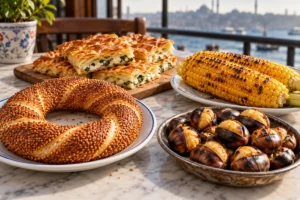
Where Are the Best Areas for Street Food in Istanbul?
Street food is available across the city, but some neighborhoods make it especially easy to try several dishes within walking distance.
Kadıköy
Kadıköy is one of the strongest food destinations on the Asian side.
You can find:
- Midye dolma
- Kokoreç
- Döner
- Börek
- Desserts
- Market food
The busy market streets make it easy to compare vendors before choosing.
Eminönü
Eminönü is particularly associated with:
- Balık ekmek
- Simit
- Roasted chestnuts
- Corn
It is a natural street-food stop when visiting the Historic Peninsula.
Beşiktaş
Beşiktaş combines bakeries, breakfast spots, döner, midye and casual street food in a compact district.
Beyoğlu and Karaköy
These areas are useful for evening food trips and combine traditional street foods with modern cafés and restaurants.
How to Eat Street Food Safely in Istanbul
A practical strategy is:
- Choose vendors with a steady flow of customers.
- Prefer food cooked or reheated in front of you.
- Avoid meat that appears undercooked.
- Be cautious with seafood that does not appear properly stored.
- Check whether cold sauces are kept cold.
- Drink sealed bottled water if you prefer not to drink tap water.
- Start with smaller portions if your stomach is sensitive.
- Avoid food that smells or looks noticeably off.
These habits are usually more useful than avoiding all street food.
Should You Avoid Street Food in Istanbul?
No, not necessarily.
Street food is an important part of Istanbul’s food culture, and avoiding it completely would mean missing dishes that define everyday eating in the city.
The goal should be selective rather than fearful.
Choose established vendors, watch how food is stored and cooked, and trust obvious warning signs.
A freshly prepared meal from a busy street-food seller can be a much better choice than food that has been sitting for hours in a quiet restaurant.
So, Is Street Food Safe in Istanbul?
For most travelers, street food in Istanbul can be enjoyed safely with basic precautions.
Focus on:
- Freshness
- Cooking temperature
- Cleanliness
- Proper storage
- Customer turnover
Foods such as simit, fresh börek, roasted chestnuts and freshly cooked döner are relatively easy places to start.
Shellfish, seafood, offal and other temperature-sensitive foods deserve more careful vendor selection.
The simplest rule is:
Eat where the food is moving quickly, being cooked fresh and being handled cleanly.
That way, you can enjoy Istanbul street food without missing one of the most memorable parts of the city’s culinary culture.
Frequently Asked Questions About Street Food Safety in Istanbul
Is it safe for tourists to eat street food in Istanbul?
Yes, many travelers eat Istanbul street food safely. Choose busy vendors, freshly cooked food and places with good hygiene and proper food storage.
Is midye dolma safe to eat in Istanbul?
It can be, but mussels require careful handling. Choose established sellers with high turnover and proper storage, especially because midye dolma combines seafood and cooked rice.
Is döner safe in Istanbul?
Döner is generally a practical choice when purchased from a busy shop where meat is actively cooking and freshly sliced.
What street food should first-time visitors try in Istanbul?
Simit, fresh börek, roasted chestnuts, corn, gözleme and freshly cooked döner are approachable starting points.
What should I avoid when buying Istanbul street food?
Avoid food that looks improperly stored, lukewarm when it should be hot, visibly undercooked, left uncovered for long periods or prepared in noticeably unclean conditions.