
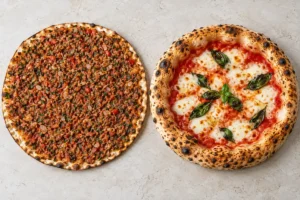
Lahmacun and pizza are both baked flatbreads with toppings, but they are separate dishes from different culinary traditions. Lahmacun has very thin dough and a finely minced meat-and-vegetable topping, traditionally without cheese. Pizza generally uses a thicker or more elastic dough, tomato sauce, cheese and toppings arranged in separate layers.
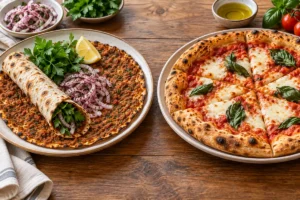
Lahmacun is usually finished with lemon and fresh herbs, then rolled or folded. Pizza is normally cut into slices and eaten flat or folded by the slice.
Lahmacun vs Pizza at a Glance
| Feature | Lahmacun | Pizza |
|---|---|---|
| Culinary tradition | Turkish and regional flatbread tradition | Italian, particularly associated with Naples |
| Dough | Extremely thin and flexible | Varies, but generally thicker or more elastic |
| Cheese | Traditionally absent | Central to many familiar styles |
| Tomato | Mixed into the meat topping | Commonly used as a separate sauce |
| Topping structure | One finely minced mixture | Sauce, cheese and distinct toppings |
| Texture | Crisp edges, flexible center | Chewy, airy, soft or crisp depending on style |
| Serving | Rolled or folded with herbs and lemon | Cut into slices |
What Is Lahmacun?
Lahmacun is a thin flatbread covered with a mixture of minced lamb or beef, tomatoes, peppers, onions, parsley, paste and spices. The ingredients are chopped finely, mixed together and spread in a light layer before baking at high heat.
It is commonly served with parsley, onions, sumac, tomatoes and lemon. For a broader introduction, including its history and eating traditions, see What Is Lahmacun?.
What Is Pizza?
Pizza is an Italian dish made with yeasted dough and a broad range of toppings. Many familiar styles use a separate tomato sauce and mozzarella, although recipes vary considerably.
Neapolitan, Roman, New York and Sicilian pizzas differ in thickness and texture. The comparison below therefore focuses on features common to many familiar pizza styles.
The Main Differences Between Lahmacun and Pizza
Dough Thickness and Structure
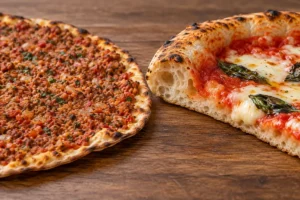
Lahmacun dough is rolled extremely thin. The finished base should be lightly crisp underneath and around the edges while remaining flexible enough to roll.
Pizza dough is usually thicker or more elastic. Even a thin-crust pizza generally has a more developed rim and a chewier, airier or more bread-like structure.
Cheese
Traditional lahmacun is generally made without cheese. Its richness comes from seasoned meat and vegetables rather than melted dairy.
Cheese is a defining ingredient in many familiar pizzas. Mozzarella contributes moisture, stretch, richness and browning, creating a very different texture and flavor.
Tomato and Topping Structure
Lahmacun does not normally have a distinct tomato-sauce layer. Tomatoes and tomato or pepper paste are incorporated into the minced meat mixture. The topping is spread as a thin, unified layer.
Pizza is often assembled in stages: sauce is spread over the dough, cheese is added and other ingredients are arranged on top. The individual toppings generally remain recognizable after baking.
Flavor
Lahmacun is savory, herbaceous and sometimes spicy. Meat, parsley, peppers and spices form the main flavor, while lemon and raw garnishes add freshness after baking.
Pizza has a much wider flavor range, but many classic forms emphasize fermented dough, tomato, olive oil, herbs and cheese. It is usually richer and more cheese-forward than lahmacun.
Texture
The defining texture of lahmacun is contrast: a thin base and crisp edges with a center that can bend. It should not be thick, puffy or brittle.
Pizza texture depends heavily on style. It may be soft and airy, crisp and thin, deep and bread-like, or chewy with a raised crust. Most versions feel more substantial than lahmacun.
How They Are Eaten
Lahmacun is commonly topped after baking with parsley, onions, sumac and lemon. It is then rolled or folded and eaten by hand.
Pizza is normally cut into triangular or rectangular slices. A slice may be folded, but fresh herbs and lemon are not usually enclosed inside it in the manner of lahmacun.
Is Lahmacun Turkish Pizza?
“Turkish pizza” is a convenient introductory label, but it is not a precise definition. The dishes look broadly similar because both use topped dough and are baked at high heat. Their structure and eating traditions, however, are different.
Lahmacun is better described as a thin Turkish flatbread with a seasoned minced-meat and vegetable topping. It should be approached as its own dish rather than as a regional pizza style.
Which Came First: Lahmacun or Pizza?
Both belong to long traditions of baking flatbread with toppings. Lahmacun is connected to the food cultures of Anatolia, the Eastern Mediterranean and neighboring regions. Modern pizza developed in Italy and is particularly associated with Naples.
They developed within different culinary settings and should not be treated as alternate versions of a single recipe.
Is Lahmacun Healthier Than Pizza?
There is no universal answer because recipes and portion sizes vary. Lahmacun is often thinner and traditionally contains no cheese, so one piece may be lighter than a heavily topped pizza. However, its nutritional value still depends on the amount and fat content of the meat, the size of the portion and the accompaniments.
Pizza can also range from a simple thin base with modest cheese to a thick crust with processed meats and extra toppings. A meaningful comparison requires the actual serving sizes and ingredients rather than the dish names alone.
Which One Should You Try?
Choose lahmacun if you prefer:
- Very thin dough
- A seasoned minced-meat topping
- No cheese
- Fresh herbs and lemon
- A light, rollable flatbread
Choose pizza if you prefer:
- A chewier or more bread-like crust
- Melted cheese
- Clearly separated toppings
- A richer meal
- Food served in slices
If you are visiting Türkiye, try lahmacun on its own terms. The combination of a thin base, spiced meat, lemon and fresh herbs offers a different eating experience from pizza.
Frequently Asked Questions
Does lahmacun have a raised crust?
Not usually. The topping is spread almost to the edge, so lahmacun does not normally develop the pronounced outer rim associated with many pizzas.
Can lahmacun be cooked in a wood-fired oven?
Yes. Traditional bakeries may use very hot stone or wood-fired ovens, which cook the thin dough and topping quickly.
Is lahmacun sold by the slice?
It is more commonly sold as a whole individual flatbread. Restaurants may cut it for sharing, but selling it by the slice is not the usual format.
Can vegetarians eat lahmacun?
Traditional lahmacun contains meat. Some restaurants offer meat-free versions, but diners should confirm the ingredients rather than assume they are vegetarian.
Can I make lahmacun in a home oven?
Yes. A thoroughly preheated stone, steel or heavy tray helps reproduce the rapid baking and crisp base. Follow the complete homemade lahmacun recipe for exact quantities and instructions.