
This Ottoman sherbet recipe combines sour cherries, pomegranate, hibiscus, cinnamon and cloves in a chilled, sweet-tart drink. The fruit and spices are gently simmered, strained and cooled before serving.
It is inspired by the broader Ottoman sherbet tradition rather than one single historical formula. Sherbets varied according to ingredients, season and occasion, and this version brings together fruit, floral acidity and warm spices.
For the drink’s history, varieties and cultural background, read our guide to Ottoman sherbet.
Recipe Overview
- Preparation time: About 10 minutes
- Simmering time: 15–20 minutes
- Infusion time: 10–15 minutes
- Chilling time: Until thoroughly cold, usually several hours
- Yield: Approximately 1–1.2 litres, depending on evaporation and straining
- Servings: 6–8 small glasses
- Equipment: Medium saucepan, fine-mesh sieve, heatproof jug and measuring utensils
Ottoman Sherbet Ingredients
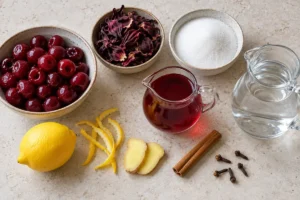
For the Sherbet
- 1 litre water
- 250 g pitted sour cherries, fresh or frozen
- 150 ml pomegranate juice
- 2 tablespoons food-grade dried hibiscus
- 1 cinnamon stick
- 4 whole cloves
- 2 thin slices fresh ginger, optional
- Peel of ½ lemon, with as little white pith as possible
- 120–180 g granulated sugar, adjusted to taste
- Up to 2 tablespoons fresh lemon juice, added gradually
Optional Finishing Ingredients
- Up to 1 teaspoon food-grade rose water, added gradually
- Fresh mint or a strip of citrus peel for serving
Use unsweetened pomegranate juice where possible. If the juice or cherries are already sweetened, begin with less sugar.
Hibiscus and sour cherries both contribute acidity. The full amount of lemon juice may not be necessary, so taste before adding it all.
How to Make Ottoman Sherbet
1. Combine the Fruit and Spices
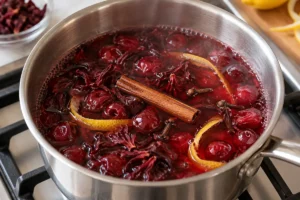
Add the water, sour cherries, hibiscus, cinnamon, cloves, optional ginger and lemon peel to a medium saucepan.
Frozen cherries can go directly into the pan without thawing. Include any juice released from the fruit, but make sure the cherries are pitted.
2. Simmer Gently
Bring the mixture just to a boil, then reduce the heat.
Simmer gently for 15–20 minutes, until the cherries soften and the liquid develops a deep red color and a fragrant aroma.
Avoid a vigorous boil. Gentle heat extracts the fruit and spice flavors while limiting evaporation.
3. Dissolve the Sugar
Add 120 g sugar and stir until dissolved.
The drink will still be warm and concentrated with fruit and spices, so leave the final sweetness adjustment until after straining and cooling a small sample.
Reserve the remaining sugar for later if needed.
4. Add the Pomegranate Juice
Remove the saucepan from the heat and stir in the pomegranate juice.
If using rose water, begin with a few drops or ¼ teaspoon. Rose-water strength varies between products, so increase cautiously rather than adding the full amount immediately.
5. Let It Infuse
Leave the mixture to infuse for 10–15 minutes.
Taste a cooled spoonful during this time. If the cloves or cinnamon are becoming too prominent, remove the whole spices early.
Longer infusion is not always better, particularly when using strong spices or a concentrated floral ingredient.
6. Strain
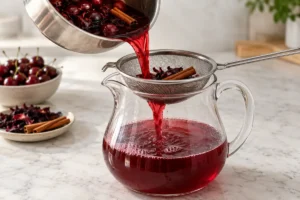
Place a fine-mesh sieve over a heatproof jug and pour the mixture through it.
Press the cherries lightly to release some remaining liquid. For a clearer drink, let the mixture drain without forcing the softened fruit through the sieve.
Discard the fruit solids, hibiscus, peel and spices.
7. Adjust the Flavor
Allow a small sample to cool before tasting.
Add lemon juice a teaspoon at a time if the drink needs more acidity. If it is too tart, add a little more sugar while the liquid is still warm enough to dissolve it.
If the flavor is too concentrated, stir in a small amount of water. Remember that ice will dilute the drink further when serving.
8. Cool and Chill
Cool the strained sherbet promptly. Standing the heatproof jug in an ice-water bath and stirring occasionally can help it cool faster.
Transfer it to a clean, covered container and refrigerate until thoroughly cold. Taste again before serving and make any final adjustment to sweetness or dilution.
What Should This Sherbet Taste Like?
This version should be sweet-tart, aromatic and light enough to drink comfortably.
Each ingredient contributes something different:
- Sour cherries: Fruity tartness
- Pomegranate juice: A deeper sweet-sour flavor
- Hibiscus: Red color and floral acidity
- Cinnamon and cloves: Warm spice notes
- Lemon: Extra brightness when needed
- Rose water: An optional floral finish
The cinnamon and cloves should support the fruit rather than dominate it. The finished texture should resemble a strained fruit drink rather than a thick dessert syrup.
Ingredient Substitutions and Adjustments
Using Sweet Cherries
Sweet cherries can replace sour cherries, but they produce a softer, less tart flavor.
Begin with less sugar and adjust the lemon juice after straining. Taste the finished drink cold before deciding whether it needs more sweetness.
Leaving Out Hibiscus
You can omit the hibiscus.
The drink will usually be less tart and may have a lighter color. Keep the other ingredients unchanged initially, then adjust the lemon juice and sugar after straining.
Using Sweetened Pomegranate Juice
Check the label before adding sugar. Sweetened juice can make the drink noticeably sweeter.
Start below the listed sugar range if necessary and increase gradually after tasting.
Leaving Out Rose Water
Rose water is optional. The cherries, pomegranate and spices provide enough flavor without it.
Replacing the Main Fruit
Apple, quince, tamarind and rose can be used in other sherbet recipes, but they are not direct substitutions with identical cooking times and quantities. Their preparation and acidity differ.
For an overview of these styles, see the Ottoman sherbet guide.
Common Ottoman Sherbet Problems and How to Fix Them
The Sherbet Is Too Sour
Hibiscus, sour cherries, pomegranate and lemon all contribute acidity.
Add sugar in small increments, dissolving it in a little warm sherbet before mixing it back into the jug. If the drink is also concentrated, dilute it slightly with water.
Next time, reserve the lemon juice until the other ingredients have been tasted together.
The Sherbet Is Too Sweet
Add a little lemon juice, tasting between additions.
If both sweetness and flavor are too strong, use water rather than repeatedly adding more acid.
The Spices Overpower the Fruit
Remove the cinnamon and cloves as soon as the desired flavor develops.
For an already strained batch, dilution can soften the spice intensity, although it will also reduce the fruit flavor. Use fewer cloves or a shorter infusion in the next batch.
The Drink Is Cloudy
Cloudiness usually comes from fruit pulp pushed through the sieve.
For a clearer result, strain again through a finer filter or a clean food-safe cloth. A little natural cloudiness does not prevent the drink from being served.
The Sherbet Tastes Bitter
White citrus pith, strong spice extraction or unsuitable floral ingredients can contribute bitterness.
Use thin strips of colored lemon peel and food-grade hibiscus or rose water. Avoid extending the infusion simply to obtain a darker color.
How to Serve Homemade Ottoman Sherbet
Serve the sherbet chilled in small glasses.
Optional garnishes include:
- A small mint sprig
- A thin strip of citrus peel
- A few pomegranate seeds
Use ice sparingly if the drink is already balanced, as melting ice changes its concentration.
It can be offered as a welcome drink or alongside a small savory snack, nuts or dried fruit. If serving it with a sweet dessert, a smaller glass and a less-sweet batch may provide a better balance.
For more options to serve at a Turkish table, explore these traditional Turkish beverages.
Making Sherbet Ahead and Storing It
This recipe can be prepared the day before serving.
Strain out the fruit and spices before storage so they do not continue changing the flavor. Cool promptly, refrigerate in a clean covered container and keep chilled until serving.
Prepare modest batches for the freshest flavor. Add mint, citrus garnish and ice only when serving. This recipe is a fresh refrigerated drink, not a shelf-stable preserve.
Frequently Asked Questions
Can I Double This Ottoman Sherbet Recipe?
Yes. Double the water, fruit and juice, and use a larger saucepan. Keep the simmer gentle and taste during infusion; you may prefer slightly less than double the cloves or cinnamon. Adjust sugar and lemon after straining.
Can I Use Ground Cinnamon Instead of a Cinnamon Stick?
Whole cinnamon is preferable because it can be removed easily. Ground cinnamon leaves sediment and may give the drink a dusty texture. If using it, begin with a small pinch and strain carefully.
Can I Freeze Homemade Sherbet?
Yes. Freeze the strained, cooled drink in suitable containers with space for expansion. Thaw in the refrigerator and stir before serving. Add fresh garnishes afterward.
Can I Replace Sugar With Honey?
Honey can sweeten the drink, but it changes the flavor. Add it gradually after taking the pan off the heat. Because honey varies in sweetness and aroma, do not assume an equal weight will produce the same result.
Can I Add Sparkling Water?
Yes. Prepare and chill the sherbet first, then add sparkling water in the glass immediately before serving. Taste as you dilute it, as carbonation and extra water change the balance.