
Traditional Turkish meals are shaped by rhythm as much as by ingredients. In Türkiye, breakfast can be leisurely and varied, lunch is often practical and filling, dinner tends to be the main shared meal of the day, and snacks, tea, fruit, and desserts fill the spaces in between.
There is no single way every household eats, of course. Habits vary by region, work schedule, season, and family tradition. Still, a typical day often revolves around fresh bread, vegetables, yogurt, grains, legumes, soups, grilled or stewed dishes, tea, and seasonal produce.
If you want to understand Turkish meals beyond individual dishes, it helps to look at how food fits into the day. For a curated list of famous foods rather than daily meal patterns, see the top 10 traditional Turkish dishes to try.
What Do People Eat for Breakfast in Türkiye?
Breakfast, or kahvaltı, is one of the most distinctive parts of everyday Turkish food culture.
On weekdays, breakfast may be simple and quick. On weekends, it can become a much longer meal shared with family or friends.
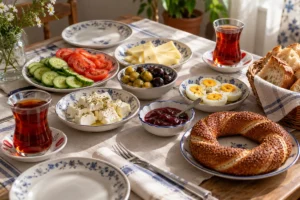
A traditional Turkish breakfast table may include:
- white cheese
- kaşar cheese
- olives
- tomatoes
- cucumbers
- eggs
- honey
- jam
- butter
- bread
- simit
- tea
More elaborate breakfasts may also include:
- menemen
- sucuklu yumurta
- börek
- gözleme
- kaymak
- tahini and pekmez
The meal is usually savory first, with sweet items added alongside rather than served as a separate dessert course.
Is Turkish Breakfast Always Huge?
No.
The large serpme kahvaltı spreads seen in restaurants are only one version of Turkish breakfast.
At home, especially on busy mornings, breakfast may be as simple as:
- bread and cheese
- olives and tea
- simit
- eggs
- a small breakfast plate
The elaborate spread is more closely associated with weekends, holidays, or social meals.
What Do People Eat for Lunch in Türkiye?
Lunch is often more practical than breakfast or dinner.
For office workers, students, and people eating outside the home, lunch may come from:
- an esnaf lokantası
- a cafeteria
- a soup restaurant
- a pide shop
- a döner restaurant
Common lunchtime foods include:
- mercimek çorbası
- kuru fasulye
- rice
- bulgur pilavı
- köfte
- döner
- pide
- lahmacun
- vegetable stews
- yogurt
A simple Turkish meal may combine soup, one main dish, rice or bulgur, salad, and yogurt.
What Is an Esnaf Lokantası?
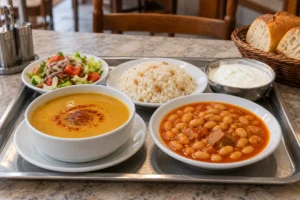
An esnaf lokantası is a traditional casual restaurant serving prepared home-style food, originally aimed at nearby shopkeepers, workers, and tradespeople.
Typical dishes may include:
- lentil soup
- white bean stew
- chickpeas
- stuffed vegetables
- meat stews
- rice
- bulgur
- seasonal vegetable dishes
This style of lunch gives a much better sense of everyday Turkish cooking than a menu built only around kebab. The guide to Turkish lokanta vs restaurant explains how their menus, service styles, and dining occasions differ.
Is Soup Common at Lunch?
Yes.
Soup is a regular part of traditional Turkish meals, especially during colder months.
Popular choices include:
- mercimek çorbası
- ezogelin çorbası
- yayla çorbası
- tarhana çorbası
- chicken soup
Soup may be eaten as a starter, but it can also be a light meal by itself with bread and lemon.
What Do People Eat for Dinner in Türkiye?
Dinner is often the main shared meal of the day.
In many households, dinner includes several components rather than one large main course.
A typical table may have:
- soup
- a vegetable or meat dish
- rice or bulgur
- yogurt
- salad
- bread
Examples of common dinner dishes include:
- karnıyarık
- kuru fasulye
- nohut
- türlü
- köfte
- grilled chicken
- stuffed peppers
- mantı
- seasonal vegetable dishes
The emphasis is often on balance rather than one oversized plate.
What Does a Typical Turkish Dinner Look Like?
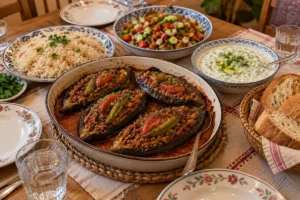
A simple home-style dinner might be:
- Soup: Mercimek çorbası
- Main: Karnıyarık
- Side: Rice pilaf
- Extra: Cacık or yogurt
- Salad: Shepherd’s salad
Another could be:
- Main: Kuru fasulye
- Side: Rice
- Extra: Pickles and yogurt
These combinations are much more representative of daily home cooking than a large mixed grill.
Are Kebabs Everyday Food in Türkiye?
Not necessarily.
Kebab is one of the most internationally famous parts of Turkish cuisine, but it is not what every household eats every day.
Home cooking often relies more heavily on:
- vegetable dishes
- legumes
- soups
- casseroles
- rice
- bulgur
- yogurt
Kebab is more likely to be eaten at restaurants, grill houses, or on special occasions than as a daily home meal. It may be the most recognizable answer to what Turkey’s signature dish is, but it represents only one side of the country’s food culture.
What Are Common Snacks in Türkiye?
Snacking is common, but it often looks different from packaged snack culture.
Popular everyday snacks may include:
- simit
- fruit
- nuts
- roasted chickpeas
- börek
- pastries
- yogurt
- ayran
- sandwiches
Tea often accompanies snacks, especially in the afternoon. It may be served with cookies, cake, börek, pastries, nuts, or fruit. In homes and workplaces, tea is less of a formal event and more of a constant social habit.
Simit can be eaten in the morning with cheese and tea, but it is also one of the most common snacks during the day. It is easy to buy from bakeries or street vendors and works well as a quick bite between meals.
What Desserts Do People Eat in Türkiye?
Dessert is important in Turkish cuisine, but it is not always eaten after every meal.
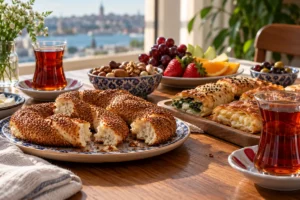
Popular desserts include:
- baklava
- sütlaç
- revani
- kazandibi
- künefe
- lokma
- helva
- aşure
- seasonal fruit desserts
Milk-based desserts and fruit are often lighter everyday choices, while syrup-heavy pastries may be more closely associated with guests, celebrations, or restaurant meals.
Do Turkish People Eat Dessert After Every Dinner?
No.
Fruit is often a more common end to a home meal. Depending on the season, a family might serve watermelon, melon, grapes, oranges, apples, or cherries. Tea may follow later.
Dessert becomes more prominent when guests visit, on holidays, or during special meals.
What Is a Typical Full Day of Turkish Meals?
A typical day might look like this:
Breakfast
Bread, cheese, olives, tomatoes, cucumber, eggs, and tea.
Lunch
Lentil soup, kuru fasulye, rice, and yogurt.
Afternoon Snack
Tea with simit, fruit, or a small pastry.
Dinner
A vegetable or meat dish with bulgur, salad, and yogurt.
After Dinner
Fruit, tea, or occasionally dessert.
This is only one example, but it shows the overall balance of meals in Turkey better than a list of famous dishes alone.
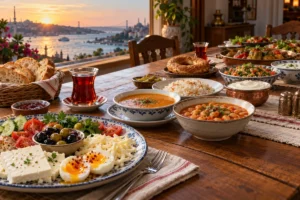
How Do Turkish Meals Change on Weekends?
Weekends often bring a slower rhythm.
Breakfast may become longer and more elaborate, with:
- menemen
- sucuk
- börek
- multiple cheeses
- olives
- spreads
- fresh bread
- tea
Lunch may be lighter after a large breakfast, while dinner can become a social meal with family or friends.
How Are Turkish Meals Different in Summer and Winter?
Seasonality matters.
In summer, meals often include more:
- fresh vegetables
- salads
- yogurt dishes
- cold olive-oil dishes
- watermelon
- melon
In winter, people may eat more:
- soups
- legumes
- stews
- oven dishes
- slow-cooked meals
This seasonal rhythm is an important part of traditional Turkish home cooking.
Are Turkish Meals Usually Shared?
Very often, yes.
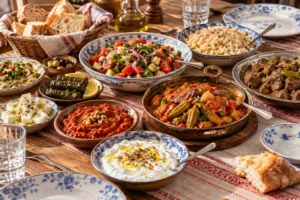
Many famous Turkish meals are designed for the table rather than for one individual plate.
Meze, salads, bread, yogurt, and side dishes are often shared.
Even at home, several dishes may be placed in the middle of the table so everyone can serve themselves.
Is Bread Served With Every Meal?
Bread is extremely common, though not literally required at every meal.
It frequently appears alongside:
- breakfast
- soup
- stews
- beans
- grilled dishes
- meze
Rice or bulgur may also take the role of the main starch. The guide to Turkish bread explains how regional loaves, flatbreads, lavaş, pide, and simit are used.
Is Yogurt Important in Turkish Meals?
Yes.
Yogurt appears throughout Turkish food culture.
It may be eaten:
- plain beside a main dish
- as cacık
- with mantı
- in soups
- in sauces
- with vegetable dishes
Its cool acidity balances rich, spicy, or tomato-based foods particularly well.
What Drinks Are Common With Turkish Meals?
Common drinks include:
- water
- ayran
- tea
- mineral water
Turkish tea is especially common at breakfast and after meals, while ayran pairs well with kebab, pide, lahmacun, köfte, and other savory dishes.
Turkish coffee is generally more associated with after-meal conversation than with the meal itself.
What Is the Main Difference Between Home Meals and Restaurant Meals?
Restaurant menus often emphasize:
- kebabs
- grilled meat
- pide
- seafood
- regional specialties
Home meals tend to include more:
- vegetables
- legumes
- soup
- rice
- bulgur
- yogurt
- simple stews
So if you want to understand traditional Turkish meals, home-style food is just as important as the famous restaurant dishes.
Frequently Asked Questions About Turkish Meals
What is a typical Turkish lunch at a lokanta?
A lokanta lunch may combine soup, kuru fasulye or another prepared main dish, rice or bulgur, yogurt, salad, and bread. Customers usually choose from dishes prepared for that day.
What is a typical Turkish dinner?
Dinner often includes a vegetable, legume, or meat dish accompanied by rice or bulgur, yogurt or cacık, salad, and bread. Soup may be served first, especially in colder weather.
Do Turkish people eat three meals a day?
Many people eat breakfast, lunch, and dinner, but routines vary with work schedules, region, household habits, and season. Tea, fruit, simit, nuts, yogurt, and pastries may appear between meals.
What foods are more common at home than in tourist restaurants?
Vegetable stews, legumes, soups, rice, bulgur, stuffed vegetables, yogurt dishes, and seasonal home cooking are often more typical of daily household meals than mixed grills or elaborate kebabs.