
Turkish breakfast is more than the first meal of the day because it often functions as a social ritual. Especially on weekends, kahvaltı creates time for family and friends to gather, share food, refill glasses of tea and remain at the table long after the practical need to eat has passed.
The foods matter, but they are only one part of the experience. The communal arrangement, unhurried pace, hospitality and conversation explain why breakfast occupies such a distinctive place in Turkish culture.
Readers looking for the dishes and ingredients themselves can begin with the Guide to a Traditional Turkish Breakfast. This article focuses on what happens around the table and why it matters.
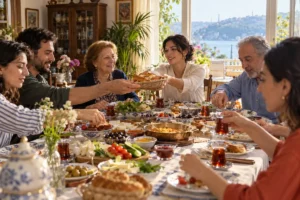
Turkish Breakfast Creates Time to Be Together
A weekday breakfast in Türkiye can be as quick and practical as breakfast anywhere else. It may consist of bread, cheese, olives or simit eaten before work or school.
Weekend breakfast follows a different rhythm.
When people have more time, breakfast can continue toward midday without a clearly defined ending. Someone pours more tea, another person reaches for bread, and the conversation moves from one subject to another.
The meal may become the main social plan for the morning rather than something completed before the day begins.
Why Is Turkish Breakfast So Social?
Much of Turkish dining culture is based on sharing, and breakfast fits naturally into that pattern.
Rather than receiving one completed plate, people usually choose from foods placed in the center of the table. This arrangement encourages small but constant interactions:
- Passing bread
- Offering food
- Sharing a pan of eggs
- Refilling tea
- Asking someone to try a particular cheese or preserve
- Making room for another dish
The table does not simply hold food. It gives people reasons to speak, offer, accept and remain engaged with one another.
The Weekend Kahvaltı Tradition
Saturday and Sunday create the strongest setting for long Turkish breakfasts.
A weekend breakfast may bring together:
- Family members
- Friends
- Couples
- Visiting relatives
- Overnight guests
- People meeting at a café or breakfast restaurant
In each case, breakfast offers an informal way to spend substantial time together. It requires less structure than a formal dinner but can still feel more meaningful than meeting briefly for coffee.
“Let’s have breakfast” may therefore mean more than choosing a meal. It can mean catching up, welcoming someone or making time for people who have not seen one another during a busy week.
Sharing Shapes the Meal
The shared arrangement of a Turkish breakfast changes how people eat.
There is no strict sequence of starter, main course and dessert. Cheese, olives, vegetables, eggs, pastries, honey and preserves may remain on the table at the same time.
A person can pause, continue talking and return to the food later. Sweet and savory flavors can alternate rather than arriving in separate courses.
This flexible structure prevents the meal from moving quickly toward a conclusion. Breakfast continues as long as the conversation and tea continue.
Why Tea Is Central to Turkish Breakfast Culture
Turkish tea helps set the pace of kahvaltı.
It is served in relatively small glasses, making repeated refills part of the experience. A person may finish eating but remain at the table for another glass of tea.
The cycle is simple:
- Pour tea.
- Eat and talk.
- Refill the glass.
- Continue the conversation.
Tea therefore does more than accompany breakfast. It creates continuity and gives people a reason to stay.
For a closer look at the brewing system and cultural role of Turkish çay, see Turkish Tea vs English Tea: Taste, Brewing and Culture Compared.
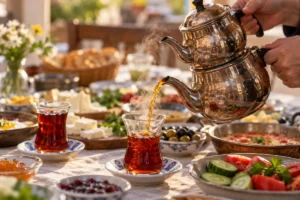
Turkish Breakfast and Hospitality
Breakfast can be an important form of hospitality.
When guests stay overnight, visit in the morning or arrive for a weekend gathering, a shared breakfast provides a welcoming meal without requiring the formality of a large dinner.
Hospitality may be expressed through abundance. A host might place several cheeses, olives, preserves, breads and hot dishes on the table, then continue offering food even after guests say they are full.
The familiar exchange between host and guest is part of the ritual:
- The host encourages everyone to eat more.
- The guest initially declines.
- Another portion is offered.
- The guest eventually accepts.
The interaction communicates care as much as the food itself.
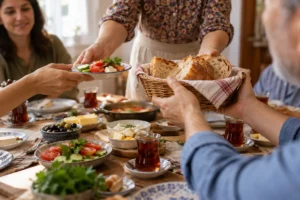
Breakfast at Home and Breakfast Outside
Turkish breakfast culture appears both at home and in restaurants, but the experience changes with the setting.
Breakfast at Home
Home breakfast can feel personal and flexible. The table may remain uncleared while conversations continue, children move in and out of the room, and someone prepares another pot of tea.
The menu does not need to be extensive. Even a small combination of bread, cheese, olives, vegetables and eggs can support a long meal when people have time to stay together.
Breakfast at a Restaurant
Restaurants make it easier to gather without one person preparing and cleaning up after the meal.
A restaurant breakfast may offer a large serpme kahvaltı with numerous small dishes. The visual abundance can be appealing, but quantity is not the essence of the experience. Fresh ingredients, comfortable pacing and the ability to share matter more than the number of plates.
Breakfast restaurants are especially busy on weekends because the meal itself becomes the outing.
Turkish Breakfast Is Not Exactly the Same as Brunch
Turkish weekend breakfast and brunch can overlap in timing, but they are not culturally identical.
Brunch is generally understood as a meal positioned between breakfast and lunch. Kahvaltı remains breakfast even when it begins late or continues toward midday.
Its identity comes from familiar breakfast foods, tea and shared table habits rather than from deliberately combining a breakfast menu with lunch.
Calling every long Turkish breakfast “brunch” can therefore hide the cultural meaning of kahvaltı.
Breakfast as a Family and Friendship Ritual
Family breakfast is often associated with weekends, holidays and visits from relatives. It gives people who follow different schedules during the week an opportunity to sit at the same table.
Breakfast with friends has a similarly important place. Meeting in the morning can feel more relaxed than organizing a formal dinner, and the gathering may continue with a walk, coffee, shopping or sightseeing.
Turkish breakfast works for both types of relationship because it provides structure without excessive formality. Food brings everyone to the table, but conversation determines how long they stay.
This rhythm is one part of the wider pattern explored in Traditional Turkish Meals: What Do People Eat in Türkiye?.
Why Travelers Should Experience Turkish Breakfast Slowly
Visitors can technically taste the main elements of a Turkish breakfast in half an hour. Doing so, however, captures the food more effectively than the culture.
A more revealing experience is to:
- Leave enough time for the meal
- Try foods gradually
- Share rather than order only an individual plate
- Allow tea to be refilled
- Avoid treating the breakfast as a checklist
- Observe how people interact around nearby tables
Menemen is one of the hot dishes most strongly associated with breakfast. Travelers who want to build a morning around it can consult Best Places to Eat Menemen in Istanbul.
The most authentic part of a long Turkish breakfast may be having nowhere else to be for the next few hours.
Why Is Turkish Breakfast More Than Just a Meal?
Turkish breakfast is more than a meal because it creates a shared social space.
It allows:
- Families to reconnect
- Friends to catch up
- Guests to be welcomed
- Food to be passed and shared
- Tea to extend the conversation
- An ordinary morning to become an occasion
The dishes bring people to the table, but the time spent together gives kahvaltı its wider cultural meaning.
Frequently Asked Questions About Turkish Breakfast Culture
Is a Long Turkish Breakfast Only a Weekend Tradition?
It is most strongly associated with weekends because people have more time, but long breakfasts can also take place during holidays, family visits and special gatherings.
Do Turkish People Share Everything at Breakfast?
Many foods are placed in the center for sharing, although individuals may also receive their own eggs, drinks or plates. The exact arrangement depends on the household and restaurant.
Why Are Turkish Tea Glasses So Small?
Small glasses allow tea to be served hot and refilled frequently. This repeated service fits the slow, conversational rhythm of a shared breakfast.
Is Serpme Kahvaltı Traditionally Eaten at Home?
Shared breakfasts have long been part of home life, but the highly elaborate serpme presentation is especially visible in restaurants. Home breakfasts can follow the same communal approach with fewer dishes.
Can Travelers Experience Turkish Breakfast Without Ordering a Huge Spread?
Yes. Menemen, bread, cheese, olives and tea can provide a representative experience without an oversized table. The shared pace and social setting matter more than the number of plates.