
Döner and shawarma both use layers of meat cooked on a rotating vertical spit, but they are not the same dish. Döner belongs to Turkish cuisine and generally emphasizes the flavor of roasted meat. Shawarma developed as a distinct preparation in the Levant and commonly uses more aromatic marinades, pickles and prominent sauces.
The easiest way to remember the difference is that döner is often more meat-forward and restrained, while shawarma is generally more spice-forward and sauce-led. Individual recipes vary, so this is a practical distinction rather than a rule that applies to every restaurant.
Döner vs Shawarma at a Glance
| Feature | Döner | Shawarma |
|---|---|---|
| Culinary tradition | Turkish | Levantine and wider Middle Eastern |
| Cooking method | Layered meat roasted on a vertical spit | Layered meat roasted on a vertical spit |
| Typical flavor | Roasted, savory and comparatively restrained | Aromatic, marinated and spice-forward |
| Common meats | Beef, lamb, chicken or mixed red meat | Chicken, lamb, beef or mixed meat |
| Bread | Turkish bread, tombik bread or lavaş | Pita, saj, laffa or other flatbread |
| Common sauces | May have no sauce; yogurt or tomato-based accompaniments vary by serving style | Toum, tahini-based sauces and other regional sauces |
| Common additions | Onion, tomato, parsley, lettuce, cabbage or pickles | Pickles, tomato, onion, parsley and other vegetables |
| Typical formats | Sandwich, dürüm, plate, over rice or as part of İskender | Wrap, sandwich or plate |
These descriptions summarize common presentations. Neither dish follows one universal recipe across every country, region or restaurant.
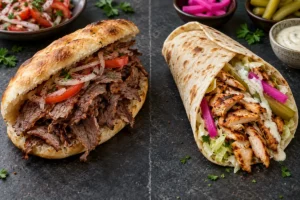
Where Do Döner and Shawarma Come From?
Döner is one of the best-known foods associated with Türkiye. Its name comes from the Turkish verb dönmek, meaning “to turn” or “to rotate,” referring to the movement of the spit.
Döner belongs to the wider Turkish kebab tradition but has developed into a category of its own. In Türkiye, it may be served inside bread, rolled in lavaş, placed over rice or presented as a plated meal.
Shawarma is associated particularly with the Levant, including Lebanese, Syrian, Jordanian and Palestinian food traditions, as well as the wider Middle East.
The similarity between the dishes is not accidental. The vertical-spit technique used for shawarma is historically related to Ottoman döner. As the cooking method spread and developed in different culinary settings, regional marinades, spices, breads, sauces and accompaniments gave shawarma its distinct identity.
Do Döner and Shawarma Use the Same Cooking Method?
Their fundamental cooking method is very similar.
Both begin with pieces or layers of meat arranged on a vertical spit. As the spit rotates beside a heat source, the outer surface cooks and browns. The cooked layer is then shaved away, exposing another surface to the heat.
This process allows the meat to be cooked and sliced progressively rather than roasting the entire stack at once.
The largest differences emerge in how the meat is seasoned before cooking and how it is served afterward.
How Is Döner Seasoned?
Döner seasoning varies according to the producer, meat and regional practice. Possible ingredients include:
- Salt
- Black pepper
- Onion or onion juice
- Yogurt or milk
- Oil
- Tomato paste
- Mild spices
Not every recipe uses all these ingredients. Some producers build the spit primarily from thin slices of whole meat, while others combine sliced and minced meat.
In many Turkish preparations, the seasoning supports rather than dominates the flavor of the roasted meat. Meat quality, fat content, stacking and heat control can be as important as the marinade.
How Is Shawarma Seasoned?
Shawarma generally uses a more aromatic spice profile. Depending on the region and the meat, a marinade may include:
- Cumin
- Coriander
- Cardamom
- Paprika
- Cinnamon
- Turmeric
- Allspice
- Garlic
- Lemon juice
- Vinegar
- Oil
No single spice mixture defines every shawarma. Chicken, lamb and beef versions can use different marinades, and recipes vary across the Levant and other parts of the Middle East.
The broader use of warm spices, garlic and acidity often gives shawarma a more pronounced marinated flavor.
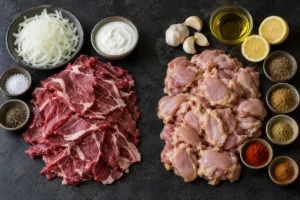
What Meat Is Used for Döner and Shawarma?
Both preparations can use several types of meat.
Döner may be made with:
- Beef
- Lamb
- Chicken
- A combination of lamb and beef
Shawarma may also use:
- Chicken
- Lamb
- Beef
- Mixed meats
Chicken shawarma is especially widespread and is often marinated with garlic, spices, acidity and oil.
The meat alone cannot reliably identify the dish. Chicken can be used for either döner or shawarma, just as lamb and beef can appear in both. Seasoning, bread, sauce and the culinary tradition in which the meat is prepared provide more useful clues.
For a broader look at meat use in Türkiye, see What Is the Main Meat in Turkish Food?.
How Are Döner and Shawarma Served?
Döner is served in several common forms in Türkiye:
- Inside a loaf of bread
- In round tombik bread
- Wrapped in lavaş as a dürüm
- On a plate
- Over rice
- As part of İskender kebab
A basic döner sandwich may be relatively simple, with onion, tomato or a small selection of vegetables. The tombik döner version uses a compact, rounded loaf instead of thin lavaş.
Shawarma is commonly served in pita, saj, laffa or another thin flatbread. The bread usually holds a combination of meat, sauce, pickles and vegetables. It can also be served as a plate rather than a wrap.
How Do the Sauces Differ?
Sauces are one of the clearest practical differences between many döner and shawarma servings.
A Turkish döner sandwich does not necessarily require a heavy sauce. Depending on the restaurant and serving format, it may have no sauce at all or include a tomato-based, yogurt-based or hot sauce.
Some plated döner dishes follow a particular formula. İskender kebab, for example, combines döner with bread, tomato sauce, yogurt and hot butter. That does not mean every form of döner is served in the same way.
Shawarma more commonly gives sauce a central role. Chicken shawarma is frequently paired with toum, a strong garlic sauce. Beef or lamb shawarma may be accompanied by a tahini-based sauce. Exact pairings vary by region and restaurant.
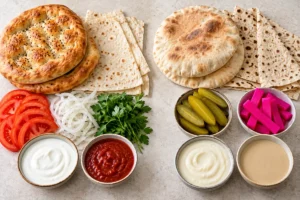
What Vegetables and Pickles Are Added?
Turkish döner may be served with:
- Tomato
- Onion
- Parsley
- Lettuce
- Cabbage
- Pickled cucumber or peppers
The combination varies considerably. Döner served in Türkiye may be relatively restrained, while versions developed elsewhere—particularly European-style döner sandwiches—can contain larger amounts of salad and sauce.
Shawarma may include:
- Pickled cucumber
- Pickled turnip
- Tomato
- Onion
- Parsley
- Lettuce
Pickles frequently play an important role in shawarma because their acidity balances the meat and sauces.
These lists should not be treated as fixed recipes. Restaurants adapt both dishes to regional preferences and available ingredients.
Is Shawarma Spicier Than Döner?
Shawarma is usually more heavily spiced, but that does not necessarily mean it contains more chili heat.
“Spicy” can refer either to hot pepper or to a broad range of aromatic spices. Cardamom, cinnamon, cumin, coriander and allspice add aroma and complexity without necessarily making the meat hot.
Döner is generally more restrained in its spice profile. However, hot sauce, chili flakes or spicy peppers may still be added when it is served.
A more accurate comparison is:
- Döner: generally roasted, savory and meat-forward
- Shawarma: generally aromatic, marinated and spice-forward
Is Döner a Type of Kebab?
Yes. Döner is one form within the broad Turkish kebab category.
Turkish kebabs can be cooked on skewers, trays, horizontal spits, vertical spits or in clay vessels. What distinguishes döner is the use of a rotating vertical spit and the progressive slicing of its browned outer layer.
Shawarma uses a closely related cooking method but belongs to a different regional culinary tradition.
Readers who want to compare döner with other Turkish preparations can explore Turkish Kebab Types: 15 Traditional Kebabs to Know.
Döner vs Shawarma vs Gyro
Gyro is another dish based on vertically roasted meat, but it should not be treated as a second name for döner or shawarma.
- Döner is Turkish and often emphasizes roasted meat with comparatively restrained seasoning.
- Shawarma is associated with Levantine and Middle Eastern food traditions and commonly uses aromatic marinades, sauces and pickles.
- Gyro is Greek and is commonly served in pita with ingredients such as tomato, onion and tzatziki.
The three dishes share a related cooking technique, but their seasonings, accompaniments and cultural identities differ.
Which One Should You Try?
Choose döner if you prefer:
- A more prominent roasted-meat flavor
- Comparatively restrained seasoning
- Turkish bread or lavaş
- Sandwich, dürüm, rice or plated serving options
- A preparation that may use little or no sauce
Choose shawarma if you prefer:
- Aromatic marinades
- Garlic or tahini-based sauces
- A more prominent role for pickles
- Pita, saj or another flatbread
- More layered spice and acidity
These are general tendencies, not absolute rules. A heavily sauced döner and a relatively simple shawarma are both possible.
Which Is Healthier: Döner or Shawarma?
Neither dish is automatically healthier. Their nutritional profiles depend on:
- The type and fat content of the meat
- Portion size
- Amount and type of bread
- Sauces
- Added oil or butter
- Vegetables and pickles
- Fries or other side dishes
A modest serving of meat with vegetables will have a different nutritional profile from a large wrap filled with rich sauce and fries, regardless of whether it is called döner or shawarma.
Restaurant-specific ingredient and nutrition information is more useful than assigning one dish a universal health advantage.
The Main Difference Between Döner and Shawarma
Döner and shawarma share the vertical-spit cooking method, but they belong to different culinary traditions.
Döner is Turkish and generally keeps the roasted meat at the center of the serving. Shawarma developed as a distinct Levantine and Middle Eastern preparation and commonly gives a larger role to aromatic marinades, pickles and garlic- or tahini-based sauces.
The simplest summary is:
Döner is generally more meat-forward and restrained; shawarma is generally more aromatic, marinated and sauce-led.
Frequently Asked Questions About Döner and Shawarma
Are Döner and Shawarma the Same?
No. They use a related vertical-spit cooking method, but their culinary origins, common seasoning profiles, breads, sauces and accompaniments differ.
What Is the Main Difference Between Döner and Shawarma?
Döner is a Turkish preparation that generally emphasizes roasted meat. Shawarma is associated with Levantine and Middle Eastern cuisines and commonly uses a more aromatic marinade together with prominent sauces and pickles.
Which Is More Heavily Seasoned?
Shawarma is generally more heavily and aromatically seasoned. Döner commonly uses a more restrained flavor profile, although recipes for both dishes vary.
Is Shawarma Always Served With Tahini?
No. Sauce pairings depend on the meat, region and restaurant. Chicken shawarma is often paired with garlic sauce, while tahini-based sauces are more commonly associated with some beef or lamb versions.
Is Gyro the Same as Döner or Shawarma?
No. Gyro is a Greek preparation. It shares the vertical-spit method but has its own meats, seasoning traditions, bread and accompaniments.