
İskender kebab is a Turkish dish made with thin slices of döner placed over pieces of bread and finished with tomato sauce, yogurt and hot melted butter.
The dish is closely associated with Bursa, where it became one of Türkiye’s most recognizable regional kebab traditions. What makes İskender distinctive is not the döner alone but the combination of its components. The bread absorbs the tomato sauce, butter and meat juices, while yogurt provides a cool contrast to the hot meat.
Unlike a döner sandwich or dürüm, İskender kebab is served as a complete plated meal and eaten with a fork and knife.
What Is İskender Kebab?
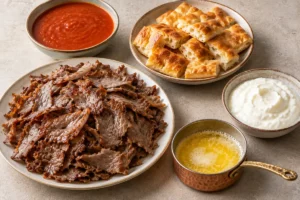
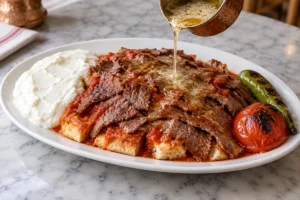
İskender kebab is a specific way of serving döner. Thin slices of rotating-spit meat are arranged over pieces of pide or another soft Turkish bread. Warm tomato sauce is added, yogurt is served alongside the meat, and hot melted butter finishes the plate.
The five defining components are:
- Döner
- Bread
- Tomato sauce
- Yogurt
- Melted butter
Grilled tomatoes and peppers may also accompany the dish, but they are not as essential as the five core elements.
The finished plate is richer and more layered than a standard serving of döner. It combines roasted meat, sauce-soaked bread, cool yogurt and aromatic butter in a single dish.
Where Does İskender Kebab Come From?
İskender kebab is strongly associated with Bursa, a city in northwestern Türkiye.
The dish is linked to the development of vertically roasted döner in Bursa and became one of the city’s signature foods. It is sometimes described as Bursa kebabı, reflecting this regional identity.
Today, İskender kebab can be found throughout Türkiye, particularly at döner specialists and kebab restaurants. Bursa, however, remains the city most closely connected with its history and traditional presentation.
The dish is one example of how Turkish kebabs differ according to cooking method and region. The complete guide to Turkish kebabs explains how rotating-spit dishes fit into the broader kebap tradition.
What Is İskender Kebab Made Of?
Each component has a particular role in the final dish.
Döner
The meat is cut into thin slices from a vertical rotating spit. Classic İskender is associated with red-meat döner, which may be made from:
- Beef
- Lamb
- A combination of beef and lamb
The meat should have browned outer edges while remaining tender. Its quality and fat balance are important because döner remains the central element of the plate.
Chicken döner versions can be found in some restaurants, but they are modern variations rather than the presentation most strongly associated with classic İskender kebab.
Bread
Small pieces of pide or another suitable Turkish bread are placed underneath the meat.
The bread absorbs:
- Tomato sauce
- Melted butter
- Meat juices
This creates one of the dish’s defining textures. The bread should become soft and flavorful without completely losing its structure.
Tomato Sauce
A warm tomato-based sauce is spooned over the bread and meat. It is normally relatively simple rather than heavily spiced.
Its role is to provide moisture, mild acidity, color and a gentle sweetness that balances the richness of the meat and butter.
Yogurt
Plain yogurt is served beside the meat rather than mixed completely into the sauce.
Its cool temperature and tangy flavor contrast with the hot döner and butter. Yogurt is not merely a garnish; it is one of the components that defines the traditional plate.
Melted Butter
Hot melted butter is poured over the meat and bread shortly before serving. In some restaurants, this is done at the table.
The butter contributes aroma, moisture and richness. It should complement the meat and sauce rather than overwhelm them.
What Does İskender Kebab Taste Like?
İskender kebab is rich, savory, buttery and mildly tangy.
The döner contributes roasted meat flavor and crisp browned edges. Tomato sauce brings gentle acidity, while the yogurt adds freshness and creaminess. The bread underneath absorbs the sauce, butter and meat juices, giving it a soft and deeply savory texture.
The dish is usually mild rather than chili-hot. Grilled peppers served on the side can add heat, depending on the variety, but the defining flavors come from the meat, tomato, yogurt and butter.
How Is İskender Kebab Served?
İskender kebab is usually assembled in the following order:
- Bite-sized bread pieces are placed on a warm plate.
- Thinly sliced döner is arranged over the bread.
- Warm tomato sauce is added.
- Plain yogurt is placed beside the meat.
- Hot melted butter is poured over the meat and bread.
- Grilled tomato and pepper may be added.
It should be served while the döner, sauce and butter are still hot. The contrast with the cool yogurt is part of the intended experience.
The dish is eaten with a fork and knife rather than picked up or wrapped in bread.
Is İskender Kebab the Same as Döner?
No. İskender kebab contains döner, but the two names do not refer to the same thing.
Döner is meat cooked on a rotating vertical spit. It can be served:
- Inside bread
- As a dürüm
- Over rice
- On a plate
- As part of another dish
İskender kebab is one particular plated preparation that combines döner with bread pieces, tomato sauce, yogurt and melted butter.
A sandwich such as tombik döner places döner inside a small round loaf and is designed to be eaten by hand. İskender places the meat over sauce-soaked bread and is served as a richer plated meal.
How Is İskender Kebab Different From Shawarma?
İskender kebab is a Turkish plated dish built around döner. Shawarma belongs to Levantine and wider Middle Eastern culinary traditions.
Shawarma frequently uses an aromatic marinade and may be served with pickles, toum or tahini-based sauce. İskender instead follows a specific combination of döner, bread, tomato sauce, yogurt and butter.
For a fuller comparison of the rotating-spit preparations, see Döner vs Shawarma: What’s the Difference?.
How Does İskender Compare With Other Turkish Kebabs?
İskender differs from skewer kebabs because its meat is sliced from a vertical döner spit.
Adana and Urfa kebabs use seasoned minced meat shaped around wide skewers and cooked over charcoal. Şiş kebab uses cubes of meat threaded onto skewers. Beyti commonly uses minced kebab wrapped in flatbread and cut into portions.
İskender is distinguished by sliced döner and its combination of bread, tomato sauce, yogurt and melted butter. Readers comparing these dishes can explore 15 traditional Turkish kebab types.
Is İskender Kebab Spicy?
İskender kebab is generally mild.
The tomato sauce may contain seasoning, and a grilled pepper can be served on the plate, but the dish does not normally depend on intense chili heat.
Its flavor is better described as:
- Savory
- Buttery
- Tomato-forward
- Creamy
- Mildly tangy
Diners sensitive to hot pepper can ask whether the accompanying pepper or tomato sauce is spicy.
Is İskender Kebab Served With Rice?
Rice is not one of the defining components of İskender kebab.
The pieces of bread beneath the döner already provide the starch element. Restaurants may offer rice or other sides, but the traditional structure of the dish is built around bread, döner, tomato sauce, yogurt and butter.
What Should You Drink With İskender Kebab?
Ayran is a familiar pairing. Its cool, lightly acidic yogurt flavor balances the richness of the meat and butter.
Water is another simple option. Turkish tea or Turkish coffee may be enjoyed after the meal rather than alongside the main plate.
Because İskender is already rich and filling, it generally does not require several heavy side dishes. A light salad or grilled vegetables can be enough.
Can You Make İskender Kebab at Home?
A home version can be made, although reproducing restaurant-style döner without a vertical rotisserie is difficult.
The characteristic serving style can be approximated with:
- Thinly sliced cooked beef or lamb
- Turkish bread
- Warm tomato sauce
- Plain yogurt
- Melted butter
Arrange the bread on a warm plate, add the meat and tomato sauce, place yogurt alongside it and finish with hot butter. The result will not reproduce professional spit-roasted döner exactly, but it can preserve the defining combination of the dish.
Where Should You Try İskender Kebab?
Bursa provides the strongest regional context because the dish is closely associated with the city.
İskender kebab is also widely available in Istanbul and other Turkish cities. Look for restaurants where döner is a central specialty and the meat is cut regularly from a properly cooked spit.
Travelers visiting Istanbul can use the guide to the best places to eat İskender kebab in Istanbul as a starting point, checking current menus and locations before visiting.
Frequently Asked Questions About İskender Kebab
Does İskender Kebab Contain Gluten?
Traditional İskender contains bread, usually made with wheat, so it is not gluten-free. Marinades and sauces may also contain gluten-containing ingredients. Diners with coeliac disease should discuss ingredients and cross-contact directly with the restaurant.
Does İskender Kebab Contain Dairy?
Yes. Yogurt and butter are defining ingredients, and the döner marinade may also contain milk or yogurt. Removing the visible yogurt alone does not necessarily make the dish dairy-free.
Can You Order İskender Without Yogurt or Butter?
Some restaurants may accommodate the request, although availability depends on how the dish is prepared. It will change the traditional flavor and presentation. For an allergy, ask about all ingredients and preparation practices rather than requesting a simple omission.
Can You Order a Smaller Portion of İskender?
Some restaurants offer different portion sizes. A standard serving may be listed as bir porsiyon, while bir buçuk porsiyon means one and a half portions. Ask whether a smaller serving is available rather than assuming every restaurant uses the same portion system.
Does İskender Kebab Contain Garlic?
Garlic is not a required ingredient in the classic yogurt accompaniment, which is usually plain. However, meat marinades and tomato sauces vary, so diners avoiding garlic should ask the restaurant.