
Turkish kebab is not one single dish. Across Türkiye, kebap refers to a broad family of meat dishes prepared by grilling, roasting, baking, slow cooking or cooking over charcoal.
Some Turkish kebabs use minced lamb shaped around long skewers. Others feature cubes of meat, thin döner slices, eggplant, yogurt, tomatoes or bread. Regional traditions also matter: a kebab associated with Adana can be very different from one originating in Bursa, Erzurum or Gaziantep.
This list focuses on individual dishes and helps you decide which Turkish kebab types to try. For cooking methods, regional traditions and ordering vocabulary, see the complete guide to Turkish kebabs.
15 Types of Turkish Kebab
1. Adana Kebab
Adana kebab is one of the best-known Turkish kebabs.
It is traditionally made with finely chopped lamb, tail fat, red pepper and salt. The mixture is shaped by hand onto wide metal skewers and grilled over charcoal.
The finished kebab is usually:
- Peppery
- Smoky
- Juicy
- Richly flavored
It is commonly served with lavaş, grilled tomatoes, grilled peppers, parsley and sumac-seasoned onions.
Adana kebab takes its name from the southern Turkish city of Adana. Its heat level varies, so a strong pepper flavor does not always mean extreme chili heat.
Best for: Diners who enjoy pepper-forward charcoal-grilled meat.
2. Urfa Kebab
Urfa kebab has a similar long, flat shape to Adana kebab. It is also made from seasoned minced meat shaped around a wide skewer and cooked over charcoal.
On many restaurant menus, the most noticeable difference is heat. Adana generally has a stronger red pepper profile, while Urfa is usually milder and allows the flavor of the meat to remain more prominent.
Both are commonly served with bread, grilled vegetables, onions and fresh herbs.
Best for: Diners looking for a milder alternative to Adana kebab.
3. Şiş Kebab
Şiş kebab is made from pieces of meat threaded onto skewers and grilled.
Lamb is a classic choice, although beef and chicken versions are widely available. The meat may be marinated with ingredients such as onion, olive oil, yogurt or seasonings before grilling.
Unlike Adana and Urfa kebabs, which use a minced mixture, şiş kebab retains the texture of individual meat cubes.
Best for: A straightforward charcoal-grilled meat experience.
4. Tavuk Şiş
Tavuk şiş is chicken cooked on skewers.
Pieces of chicken may be marinated with yogurt, olive oil, garlic, pepper paste or spices before being grilled. The marinade adds flavor, while careful grilling helps keep the chicken moist and gives the exterior browned edges.
Tavuk şiş is commonly served with rice or bulgur, salad, grilled vegetables and flatbread.
Best for: Diners who prefer chicken or a milder grilled kebab.
5. İskender Kebab
İskender kebab is a Bursa specialty made with thin slices of döner placed over pieces of bread.
The plate is completed with:
- Tomato sauce
- Yogurt
- Melted butter
The bread absorbs the sauce, butter and meat juices, making İskender richer and more layered than a standard döner serving.
Read What Is İskender Kebab? for a closer look at its ingredients and traditional serving style.
Best for: A rich, sauce-led döner dish eaten with a fork and knife.
6. Döner Kebab
Döner is one of the most internationally recognized Turkish kebab types.
Seasoned meat is stacked on a vertical rotating spit and cooked progressively from the outside. As the outer surface browns and cooks through, it is shaved into thin slices.
Döner may be made with:
- Beef
- Lamb
- Chicken
- Mixed red meat
It can be served in bread, wrapped in lavaş, placed over rice or presented on a plate. A distinctive sandwich version called tombik döner uses a small, round loaf.
Although shawarma uses a related vertical-spit technique, the two have different culinary traditions, seasonings and accompaniments. These distinctions are covered in the döner vs shawarma comparison.
Best for: A quick meal with several bread, wrap and plate options.
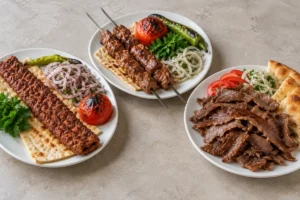
7. Beyti Kebab
The rolled Beyti preparation commonly found on restaurant menus consists of seasoned minced meat grilled on skewers, wrapped in thin flatbread and cut into individual pieces.
It is often finished with tomato sauce and served with yogurt. Its sliced, rolled presentation distinguishes it from a standard skewer kebab.
Restaurant preparations can vary, particularly in the type of meat, sauce and bread used.
Best for: Diners who enjoy minced kebab combined with bread, tomato and yogurt.
8. Patlıcan Kebabı
Patlıcan kebabı combines meat and eggplant.
Thick eggplant slices are arranged between portions of seasoned meat and then grilled or baked. As the ingredients cook, the eggplant softens and absorbs meat juices.
Different regional and restaurant versions may be assembled on skewers or prepared on a tray.
Best for: Diners who enjoy the combination of smoky eggplant and meat.
9. Ali Nazik Kebab
Ali Nazik combines seasoned meat with a base of smoked eggplant, yogurt and garlic.
The defining feature is the contrast between:
- Smoky eggplant
- Cool, tangy yogurt
- Hot meat
The dish is particularly associated with Gaziantep cuisine. Its eggplant base makes it texturally different from bread-based kebabs such as İskender or Beyti.
See What Is Ali Nazik? for its ingredients and serving style.
Best for: A creamy, smoky kebab with an eggplant base.
10. Cağ Kebabı
Cağ kebabı is a regional specialty associated with Erzurum.
Unlike döner, which uses a vertical spit, cağ kebabı traditionally cooks marinated lamb on a horizontal rotating spit. Portions are cut onto small skewers known as cağ and served as they are ordered.
It is typically accompanied by lavaş, onion and simple garnishes.
Best for: Lamb lovers interested in a regional rotating-spit kebab.
11. Testi Kebabı
Testi kebabı, also called pottery kebab, cooks meat and vegetables inside a clay vessel.
Common ingredients include:
- Lamb or beef
- Tomatoes
- Peppers
- Onions
- Garlic
The vessel is sealed and heated until the meat and vegetables become tender. In restaurants, it may be cracked open as part of the presentation.
Testi kebabı is widely encountered in Cappadocia, although clay-vessel kebab traditions are not limited to one tourist destination.
Best for: Travelers exploring Cappadocia and slow-cooked meat dishes.
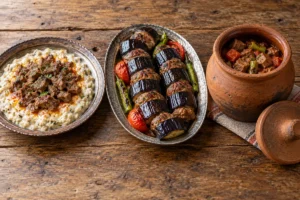
12. Orman Kebabı
Orman kebabı is a home-style meat dish rather than a charcoal-grilled skewer.
It is generally prepared with diced meat and vegetables such as:
- Peas
- Carrots
- Potatoes
- Onions
The result is closer to a stew, demonstrating how broadly the word kebap can be used in Turkish cuisine.
Best for: Traditional home-style cooking and tender meat with vegetables.
13. Tas Kebabı
Tas kebabı is another slow-cooked, stew-like kebab.
Small pieces of meat are cooked with onion, tomato and sometimes vegetables until tender. It may be served with rice, mashed potatoes or bread.
Tas kebabı is a useful reminder that not every Turkish kebab is cooked on a skewer or over charcoal.
Best for: A comforting, sauce-based meat dish.
14. Çöp Şiş
Çöp şiş consists of small pieces of meat threaded onto thin skewers and grilled quickly over high heat.
The small size gives the meat a high proportion of browned surface. It is particularly associated with western Türkiye and is commonly served with bread, tomatoes, onions and peppers.
Best for: Small, intensely grilled pieces of meat.
15. Yoğurtlu Kebab
Yoğurtlu kebab is a general name used for kebab served with yogurt and bread, often accompanied by tomato sauce or seasoned butter.
The exact meat preparation can differ between restaurants. The defining feature is the combination of hot meat, bread, sauce and cool yogurt.
Because several dishes share these components, the name may not describe exactly the same presentation in every restaurant.
Best for: Diners who enjoy kebab with yogurt and sauce.
Which Turkish Kebab Should You Try?
The best choice depends on the cooking method and flavors you prefer:
- Choose Adana for a pepper-forward minced kebab.
- Choose Urfa for a generally milder minced kebab.
- Choose şiş for cubes of charcoal-grilled meat.
- Choose döner for thin rotating-spit slices.
- Choose İskender for döner with bread, tomato sauce, yogurt and butter.
- Choose Ali Nazik for meat over smoked eggplant and yogurt.
- Choose cağ kebabı for a regional lamb preparation.
- Choose testi kebabı for slow-cooked meat and vegetables in a clay vessel.
Trying different cooking styles gives a better introduction to Turkish kebabs than choosing several dishes with the same meat preparation.
Which Turkish Kebabs Are Regional?
Many kebabs are strongly associated with particular cities or regions:
- Adana kebab: Adana
- Urfa kebab: Şanlıurfa
- İskender kebab: Bursa
- Ali Nazik: Gaziantep
- Cağ kebabı: Erzurum
- Testi kebabı: widely associated with Cappadocia
- Çöp şiş: western Türkiye
These dishes can now be found across the country, but their regional associations remain an important part of their identity.
Frequently Asked Questions About Turkish Kebab Types
Is Tavuk Şiş a Separate Cooking Method From Şiş Kebab?
No. Both use skewers. Tavuk identifies the meat as chicken, while menus may use şiş kebab on its own for a red-meat preparation. The distinction is mainly the meat and marinade rather than the equipment.
Are Beyti and İskender Made With the Same Meat Preparation?
Not usually. The rolled Beyti commonly served in restaurants uses a grilled minced-meat kebab wrapped in flatbread. İskender uses thin slices of döner arranged over bread pieces.
Is Patlıcan Kebabı Vegetarian?
No. Although patlıcan means eggplant, patlıcan kebabı normally combines eggplant with meat. Diners looking for a meat-free eggplant dish should confirm ingredients rather than relying on the vegetable in the name.
Does Yoğurtlu Kebab Always Mean İskender?
No. Yoğurtlu means “with yogurt” and can describe several kebab presentations. İskender follows a more specific combination of döner, bread, tomato sauce, yogurt and butter.
Do All Turkish Kebabs Have Geographically Fixed Recipes?
No. Some regional kebabs have formally registered specifications, while other names describe broader cooking styles or restaurant presentations. Ingredients and accompaniments can therefore vary even when the menu name is the same.